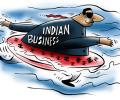
Across the country, companies have stepped up their act to contain the crisis. IT and other new economy firms seem to have taken a lead.

The sales growth rate has been a 10-quarter low, dragged by slowdown in the key sectors -- capital goods, construction, infrastructure, non ferrous metals, steel and telecom -- that had contributed to India Inc's growth story in the past.

A vast majority of the business leaders believe that the Production Linked Incentive (PLI) schemes have been beneficial and expect an extension to other sectors in the coming years, a Deloitte Survey said on Friday. An overwhelming number of survey respondents hope the budget will fuel growth across industries by building strong domestic demand and focussing on capital expenditure and believe that it would define the 'Amrit Kaal'. "Critical to this growth will be the pace of capital expenditure, infrastructure development, and the need to boost infrastructure financing through private partnership. 60 per cent of respondents suggested raising funds through Indian Government Bonds," the survey said.

Stocks of Indian companies with exposure to Europe fell on Tuesday amid concerns about the impact on their sales in case the Russia-Ukraine crisis worsens and the US and its allies impose economic sanctions on Russia. While top conglomerates, including Reliance Industries, the Tata group, and Aditya Birla Group, said they did not have any significant exposure to Russia, executives of some of the oil and gas, pharmaceutical, and tea companies said they were monitoring the situation closely as they earned substantial income from the region. Russian President Vladimir Putin on Monday ordered troops into two breakaway regions of eastern Ukraine after announcing that Russia would recognise their independence.

Outflows fell 16.4 per cent in April-Sept 2009 compared to the year-ago period.

If financials and oil sectors were removed, India Inc has done quite well.

The year saw India's biggest corporate fraud, falling earnings, stock market crash, job losses and soaring food prices which hit the common man
Today, when corporate governance practice has become a priority issue, a vast majority of India Inc feels there is a need for stronger regulatory review and enforcement, according to a report by the international consultancy firm KPMG.


Talking corporate heads are a barometer of the business community's engagement with the economy. If they have nothing to say now there should be cause for concern.

With the dizzying rise in the number of Covid-19 cases in the country, India Inc has transitioned from a wait-and-watch policy to full-on emergency mode, bringing back remote and flexi work, stringent safety protocols, and allowing only essential travel. Companies - especially in metros like Delhi, Mumbai and Kolkata - that had adopted a hybrid work model during the last few months when the caseload remained low, are either switching back entirely to work-from-home (WFH), or calling skeletal staff to office on select days. Take the case of cigarettes-to-hotels major, ITC, which had been on a hybrid work model over the last few months.

The government's plan to cut the corporation tax rate while phasing out exemptions may be sound, but it may not mean a reduced tax burden for India Inc.

A fundraising boom in the domestic market and tightening of the regulatory framework for overseas issues are responsible for this trend.

In a relief to FMCG major Dabur, two of its foreign subsidiaries, Dabur International and Dermoviva Skin Essentials, have been removed as a defendant in multiple lawsuits filed in a US court over allegations that their hair-relaxer products caused ovarian cancer, uterine cancer and other related health issues. However, lawsuits filed against its third international subsidiary Namaste Laboratories LLC, would continue before the US District Court for the Northern District of Illinois, according to a statement from Dabur on Wednesday. Dabur International and Dermoviva were removed and got relief in the multiple suits due to lack of jurisdiction as they have not either manufactured, marketed, distributed or sold hair relaxer products in the US, it added.

Reacting to the results, Congress general secretary Priyanka Gandhi Vadra said that in the by-elections held on 13 seats in seven states, the people of the country have given their support to the INDIA bloc.
It's been a challenge, especially being glued to the TV set for the late night matches.

Though out of 200 firms approached, only 44 responded, nevertheless the 'Carbon Disclosure Project Report 2009' noted the response reflects that not only they were adopting more accurate methodologies but also providing break-down of their greenhouse gas emissions.

This was even as the country's economy grew by 7.3%.

If Tesla comes in, India's position as a manufacturing hub will rise many notches, as it will become only the second country, after China, to have both Apple as well as Tesla.

Following the end of the grandfathering period given to India Inc to replace their independent directors who had already served for 10 years, certain companies have come up with unique ways to replace the old guard.
Individuals will have to wait for some more time; RBI may do away with mid-quarter policy reviews.
Sales grow 5.3 per cent in third quarter; profit just 1.9%; margins continue to contract.

Some are treating the price correction as akin to a fiscal stimulus that could kick-start a new demand cycle in the economy.

US-based retail giant Walmart is looking to source toys, shoes and bicycles from Indian suppliers as the company is targeting to increase its exports from India to USD 10 billion annually by 2027. The company also wants to develop new suppliers in categories such as food, pharmaceuticals, consumables, health and wellness, and apparel and home textiles, a company spokesperson told PTI. Officials from the Bentonville-headquartered firm recently held a virtual meeting with several domestic toy manufacturers in India.
The survey revealed that unethical behaviour still persists, with a majority of respondents justifying unfair actions undertaken to survive the economic downturn.
India Inc has couter attacked claims by US presidential candidates about the drain of jobs from US to India.
72 per cent of the revenue of Indian firms (India Inc) is derived from the domestic / home market - the sixth highest in percentage terms in the emerging market (EM) and the Asian region, said a recent report by Morgan Stanley. The balance, according to the report titled 'Global Exposure Guide 2021' co-authored by analysts led by Jonathan F Garner, their chief Asia and emerging market strategist, is split between the developed markets (DMs) and other EMs. The report is based on an analysis of 3,300 companies globally that have revenue exposure in 17 different regions.
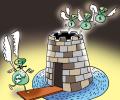
Interrupting a two-month streak of decline, outward foreign direct investment (FDI) rose sequentially to $1.85 billion in July over $1.07 billion in June, an increase of 73 per cent. However, it was lower than the $2.18 billion in July last year, according to the Reserve Bank of India data. Outbound FDI, expressed as financial commitment, has three components - equity, loans, and guarantees.
 © 2026 Rediff.com - Advertise with us - Disclaimer - Privacy Policy - Sitemap - Feedback - About us - Terms of use - Grievances